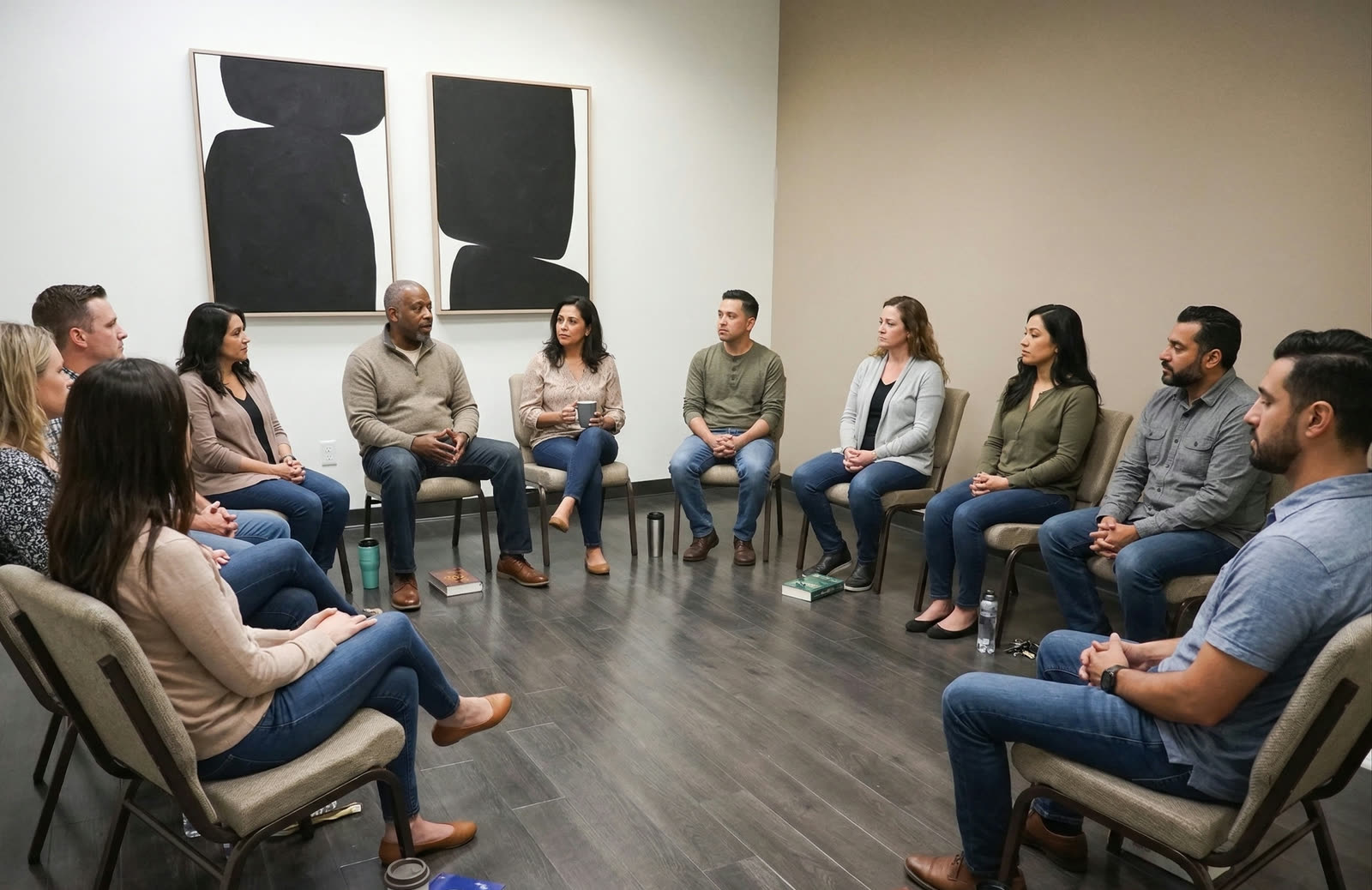
ADHD & Addiction
Attention-deficit/hyperactivity disorder (ADHD) is one of the most established risk factors for substance use disorders in adults, with research indicating that adults with ADHD are two to three times more likely to develop a substance use disorder than the general population. ADHD is also significantly underdiagnosed in adults, meaning many people enter addiction treatment having never received an accurate evaluation. Untreated ADHD makes recovery harder at nearly every level: it reduces engagement in treatment, increases impulsive decision-making, and leaves the self-medication that often drives substance use in place. The Archangel Centers treats ADHD and addiction together through integrated outpatient care at our Tinton Falls, New Jersey and Charlotte, North Carolina locations, with one clinical team managing both conditions from assessment through discharge.
Medically reviewed by Dr. Justin Skolnick, DO, Medical Director. Last reviewed June 7, 2026.
Understanding ADHD in adults: what it looks like and why it is often missed
ADHD is a neurodevelopmental condition characterized by persistent patterns of inattention, hyperactivity, and impulsivity that interfere with daily functioning. The DSM-5 identifies three presentations: predominantly inattentive, predominantly hyperactive-impulsive, and combined. In adults, the hyperactive-impulsive symptoms that are most visible in children often present differently: the child who climbed everything becomes the adult who cannot sit through meetings or makes rapid, poorly considered decisions. Inattention, often the dominant adult presentation, shows up as chronic difficulty sustaining attention, losing things, forgetting commitments, struggling to initiate or complete tasks, and being easily sidetracked by irrelevant stimuli.
Adult ADHD also involves significant emotional dysregulation, which is not always emphasized in diagnostic criteria but is one of the most functionally impairing features in clinical practice: rapid mood shifts, low frustration tolerance, difficulty recovering from setbacks, and an intense emotional response to perceived failure or criticism. This emotional layer is both a driver of substance use and a barrier to treatment engagement when it is left unaddressed.
ADHD is missed in adults for several reasons. Many adults with ADHD developed compensatory strategies in childhood that masked the condition until demands exceeded their capacity in college, early careers, or parenting. ADHD symptoms also overlap significantly with the presentation of depression, anxiety, PTSD, and active substance use, making accurate diagnosis require careful exclusion of those alternatives and a thorough developmental and longitudinal history.
How ADHD and substance use connect: the neurobiological link
The neurobiological basis of ADHD involves underactivity in the brain's dopamine and norepinephrine systems, particularly in the prefrontal cortex, which governs executive function: planning, working memory, impulse control, and the ability to shift attention. This is the same dopamine-reward pathway that is dysregulated by substance use disorders.
Stimulants, including cocaine, methamphetamine, and misused prescription medications, flood the dopamine system and provide a powerful but brief normalization of attention and energy for people with ADHD. Cannabis blunts the hyperarousal and emotional dysregulation that make ADHD socially exhausting. Alcohol quiets the constant mental activity that many people with ADHD describe as a never-quiet inner noise. These effects are the mechanism of self-medication, and they explain why adults with ADHD report that their preferred substance often makes them feel temporarily more like everyone else.
Impulsivity, one of the defining features of ADHD, also directly increases substance use risk independent of self-medication. Impulsive decision-making reduces the effectiveness of the pause-and-reflect capability that recovery demands. Relapse in people with ADHD is often not planned; it happens in a moment without the cognitive braking that would normally allow someone to recognize the trigger, execute the coping plan, and redirect. Treating the ADHD directly improves that braking capacity and, with it, recovery outcomes.
Why integrated treatment outperforms treating one condition alone
Treating addiction without addressing ADHD leaves the cognitive and emotional deficits that drive self-medication in place. Clients with untreated ADHD have more difficulty engaging in and completing treatment, following through on relapse-prevention plans, attending appointments consistently, and managing the organizational demands of early recovery. The impulsivity that drove substance use initially remains a live relapse risk.
Treating ADHD without addressing substance use raises its own clinical challenges, particularly around medication. Stimulant medications, the most effective pharmacological treatment for ADHD, carry misuse and diversion risk in clients with active substance use disorders, requiring careful clinical oversight that integrated care is specifically designed to provide. Non-stimulant options (atomoxetine, guanfacine, bupropion) have a better safety profile for clients with substance use histories and are often the first-line choice our providers consider.
Both NIMH and SAMHSA identify integrated care as the standard for co-occurring neurodevelopmental and substance use conditions. At The Archangel Centers, this means the same psychiatric provider who evaluates for ADHD and prescribes or manages medication also has full visibility into the substance use history, the active MAT plan if applicable, and the therapeutic work happening in CBT. The therapist delivering ADHD-adapted CBT knows the medication status and coordinates skill work accordingly.
Clinical modalities for co-occurring ADHD and addiction
Accurate diagnosis is the necessary first step. Our intake assessment goes beyond symptom checklists to include a thorough clinical interview, developmental history, validated ADHD rating scales, and careful exclusion of depression, anxiety, trauma, and active withdrawal as symptom contributors. Treatment then proceeds with one integrated plan.
- CBT adapted for ADHD: specifically modified to address executive function deficits, building practical skills for planning, task initiation, time management, organization, and the management of distractibility in recovery settings
- DBT for emotional regulation: targets the rapid mood shifts, low frustration tolerance, and emotional dysregulation that are central to adult ADHD and that represent an underrecognized relapse driver
- Behavioral activation with daily routines: structured scheduling and accountability that work with the ADHD brain rather than against it, reducing the friction that makes treatment attendance and recovery tasks harder
- Motivational interviewing: supports ambivalence work, particularly around medication decisions and the difficulty of engaging with structured treatment when executive function is impaired
- Contingency management principles: behavioral reinforcement strategies that leverage the ADHD brain`s responsiveness to immediate rewards, making progress in recovery more tangible and motivating
- Psychiatric evaluation and medication management: careful collaborative evaluation considering non-stimulant options first (atomoxetine, guanfacine, bupropion), with stimulant consideration under close monitoring when clinically indicated; coordinated with any MAT
- MAT for co-occurring opioid use disorder: Suboxone, Vivitrol, and Sublocade available through the on-site medical provider; there is no FDA-approved MAT equivalent for stimulant use disorder, making behavioral approaches the evidence-based foundation for that presentation
- Trauma-informed care with EMDR: available when trauma co-occurs, as it frequently does in adults with long-undiagnosed ADHD who have accumulated significant adverse experiences
- Safety planning: completed on admission day and revisited throughout treatment
- Family programming: sessions led by Lauren Sorrentino at both locations under signed release, providing education about ADHD in recovery and practical support strategies for family members
What treatment looks like day to day: assessment through discharge
Admission day at The Archangel Centers includes a full clinical assessment with the primary therapist, a medical intake with the on-site provider, and a standardized assessment battery: ASAM criteria, LOCUS mental health acuity, PHQ-9, GAD-7, Columbia Suicide Severity Rating Scale, biopsychosocial evaluation, and nutrition and pain screens. ADHD evaluation is woven into the intake process alongside the substance use and mental health assessment, with validated rating scales and developmental history taken to distinguish ADHD from other conditions that produce similar symptoms in the context of active substance use.
The skill-building phase involves CBT adapted for executive function, DBT group skills, behavioral activation planning, relapse prevention, and any trauma-informed group work indicated. The medical provider monitors attention, impulsivity, mood, and substance use, adjusting the medication plan as the clinical picture evolves and as ADHD symptoms become clearer with stabilization from substance use.
The integration phase shifts focus to applying executive function skills outside the clinic, extending the planning and organizational tools into the daily structures of real life, and building a relapse-prevention plan that specifically addresses ADHD-driven relapse pathways: impulsive decisions in high-risk moments, disengagement from recovery tasks due to difficulty sustaining attention, and the emotional dysregulation that can rapidly override an otherwise solid recovery plan. Aftercare coordination connects clients to outpatient continuing care, ongoing psychiatric medication management, and the alumni community.
Levels of care for co-occurring ADHD and addiction
Clients with significant ADHD symptoms and active substance use often benefit from the daily structure of Partial Hospitalization (Partial Care), where the external scaffolding of a highly structured schedule compensates for the internal executive function deficits that ADHD creates. Our Tinton Falls, New Jersey clinic runs Partial Care six days per week, Monday through Saturday. Our Charlotte, North Carolina clinic runs PHP five days per week, Monday through Friday.
Intensive Outpatient, available at both locations three or five days per week for three-hour sessions, serves clients stepping down from Partial Care or those presenting with moderate initial symptoms. The group-based format of IOP also provides what clinicians sometimes call a body-doubling effect: the shared presence of others working on similar tasks reduces the difficulty of sustained attention that ADHD creates in solo environments. Standard outpatient continuing care includes ongoing individual therapy, periodic medication management, and group access.
Virtual treatment is available to New Jersey residents. Because ADHD is a chronic condition, the relationship with our clinical team typically extends beyond the intensive phases into ongoing medication management and check-ins, particularly around transitions in life that increase executive function demands. The Archangel Centers does not provide inpatient care; when acute needs exceed outpatient scope, the team coordinates placement and supports the client`s return.
Insurance, cost, and getting started
The Archangel Centers is in-network with Aetna, Cigna, BlueCross BlueShield, United Healthcare, Horizon BCBS, AmeriHealth NJ, Humana, and Tricare. Our admissions team verifies your benefits for free before any commitment, usually within the first call, so you know your real out-of-pocket cost upfront. Most major commercial plans cover medically necessary outpatient dual-diagnosis treatment under the Mental Health Parity and Addiction Equity Act. Sliding scale and payment plan options are available for clients with limited coverage.
Admissions is confidential, available 24 hours a day. Calling (888) 464-2144 connects you to a specialist who can verify benefits, discuss levels of care, and often arrange same-week placement. No prior referral is needed. For family members calling on behalf of a loved one, our team can explain the process, discuss what the assessment looks like, and help with the conversation of asking someone to accept help.
Common questions
How are ADHD and addiction connected?
Adults with ADHD are two to three times more likely to develop a substance use disorder than the general population, for two primary reasons. First, the dopamine-regulation deficits of ADHD make substances that flood the reward system temporarily normalizing, driving self-medication. Second, the impulsivity that is a core ADHD feature reduces the pause-and-reflect capacity that recovery requires, making it harder to resist use in high-risk moments. Treating ADHD directly addresses both mechanisms.
Can you prescribe stimulants if I am in recovery from substance use?
Stimulant medications can be clinically appropriate even during recovery, but they require careful selection, close monitoring, and a coordinated plan that includes your recovery team. Our psychiatric providers typically consider non-stimulant alternatives (atomoxetine, guanfacine, bupropion) first for clients with substance use histories, given their lower misuse potential. When stimulants are clinically indicated and the benefits outweigh the risks, they are prescribed under close oversight with regular check-ins. The collaborative decision is made between you and the on-site provider with full transparency.
Can adults be diagnosed with ADHD for the first time while in addiction treatment?
Yes, and it is not unusual. Many adults enter treatment having never received an ADHD evaluation, often after years of struggling with focus, organization, and follow-through in ways that were attributed to character, anxiety, or substance use itself. Our intake assessment includes validated rating scales, developmental history, and a careful clinical interview to make an accurate adult diagnosis and distinguish ADHD from other conditions that produce overlapping symptoms.
How can I stay consistent with treatment when ADHD makes it hard to follow through?
ADHD creates real barriers to treatment engagement: forgetting appointments, losing track of time, difficulty initiating tasks, and disengagement when sessions feel repetitive. Our New Jersey and North Carolina case managers build structured reminders, consistent session schedules, and accountability check-ins specifically around these barriers. The skills we teach in CBT adapted for ADHD, including external scheduling systems, task initiation strategies, and environmental modifications, are applied directly to the treatment attendance challenge, not just to life outside treatment.
Will treating my ADHD help with the urge to use substances?
For many people, yes. When attention, impulsivity, and emotional dysregulation are better managed through therapy and appropriate medication, both the drive to self-medicate those symptoms and the impulsive in-the-moment relapse risk tend to decrease. Research supports the finding that effective ADHD treatment in adults with co-occurring substance use disorders improves treatment retention, reduces impulsive relapse, and supports longer periods of remission.
Is there medication for stimulant use disorder the way there is for opioid use disorder?
There is currently no FDA-approved medication-assisted treatment for stimulant use disorder comparable to Suboxone or Vivitrol for opioid use disorder. The evidence-based foundation for stimulant use disorder treatment is behavioral: CBT, contingency management, and DBT are the primary clinical tools. Our integrated approach applies these modalities within the same plan that addresses co-occurring ADHD, building both the executive function skills and the relapse-prevention strategies that support recovery from stimulant use.
What if I am having thoughts of suicide?
Call or text 988 (Suicide and Crisis Lifeline), text HOME to 741741 (Crisis Text Line), or call 911 immediately. Safety planning using the Columbia Suicide Severity Rating Scale is completed on admission day and revisited throughout treatment. Acute suicidal ideation may require a higher level of care before outpatient programming; the team coordinates that placement and supports your return when you are safe.
I have both a mental health condition and a substance problem. Am I too complicated to treat?
No. Co-occurring ADHD and substance use disorders are among the most common dual-diagnosis presentations in outpatient addiction treatment settings. The Archangel Centers is built for exactly this combination. The integrated model means one team manages both conditions, ADHD treatment supports recovery by reducing impulsivity and improving executive function, and recovery reduces the neurobiological stress that drives ADHD self-medication. Having both diagnoses is not a barrier to treatment. It is the clinical picture the integrated model was designed for.
Depression & Addiction
How depression and substance use feed each other.
Learn moreAnxiety & Addiction
Treating anxiety disorders alongside addiction.
Learn morePTSD & Addiction
Trauma, PTSD, and substance use.
Learn moreBipolar & Addiction
Managing bipolar disorder in recovery.
Learn moreGet Outpatient Treatment, New Jersey
Founder-led outpatient care in Tinton Falls, New Jersey.
Learn moreGet Outpatient Treatment, North Carolina
Outpatient care for the greater Charlotte, North Carolina area.
Learn moreIn-network with most major commercial insurance plans
Verification is free and confidential, with no obligation. We tell you exactly what is covered for outpatient care before you commit.
I had the honor of touring this facility, and it was absolutely beautiful, clean, and thoughtfully designed. But more than how it looked, you could feel the love in every detail. Watching the staff interact with clients genuinely touched my heart.
John PereiraVerified Google reviewArch Angels gave me my life back. Their team is the most amazing, caring people I have ever met. The groups are amazing and this whole program is amazing. If you are tired of being sick and tired, reach out and save your life.
Cisco AvilaVerified Google reviewThis facility is run by some of the best people you could ever ask for. They are extremely professional and truly dedicated to helping those struggling with mental health and addiction. They truly saved my life.
Priscilla SeamanikVerified Google review